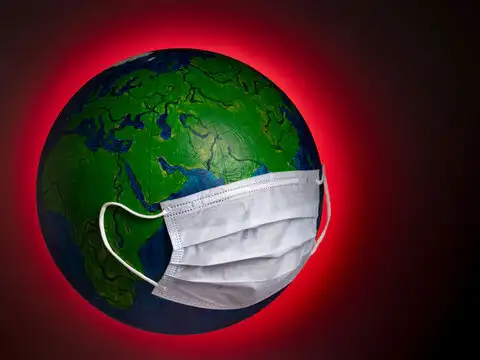
The Air Quality Index (AQI) is a system used to show how clean or polluted the air is in a particular area. It helps people understand the quality of the air they are breathing and whether it can affect their health. The AQI is measured using different pollutants such as dust particles (PM2.5 and PM10), carbon monoxide, nitrogen dioxide, sulphur dioxide, and ozone. Each of these pollutants can harm human health, especially when their levels are high. The AQI is shown as a number that usually ranges from 0 to 500. A lower number means the air is clean and safe, while a higher number means the air is more polluted and dangerous to breathe. For example, an AQI between 0 and 50 means the air is good, but if it rises above 200, it becomes unhealthy for everyone. When the AQI is very high, people—especially children, elderly individuals, and those with breathing problems—should avoid outdoor activities. The main purpose of the AQI is to make people aware of air pollution and help them take precautions to protect their health and the environment.
Main Air Pollutants That Affect the Air Quality Index (AQI)
The Air Quality Index (AQI) is calculated by checking the amount of some main air pollutants in the air. These pollutants are harmful gases and tiny particles that can make the air dirty and unhealthy to breathe.
The important pollutants that affect the AQI are:
- PM2.5 – These are very tiny dust particles that are smaller than 2.5 micrometers. They can go deep into our lungs and cause breathing problems.
- PM10 – These are bigger dust particles (less than 10 micrometers) that can cause coughing and throat irritation.
- Ozone (O₃) – This is a gas found near the ground that can cause chest pain and breathing trouble when its level is high.
- Nitrogen Dioxide (NO₂) – This gas mainly comes from vehicles and factories and can irritate our lungs.
- Sulphur Dioxide (SO₂) – This gas is released from burning coal and can cause eye, nose, and throat irritation.
- Carbon Monoxide (CO) – This is a harmful gas that comes from car exhaust and can make people feel dizzy or tired if its level increases.
Usually, the worst pollutant among these (the one that has the highest level) decides the AQI number for that area. So, if PM2.5 is the most polluted, it will make the AQI higher.
How AQI is calculated (Simple Explanation)
Air is tested:
First, machines measure how much of each pollutant (like PM2.5, PM10, CO, NO₂, SO₂, and O₃) is present in the air.
For example, PM2.5 might be 92 micrograms per cubic meter (µg/m³) in one day.
Compare with standard levels:
Every country has a chart or table that shows what range of pollutant levels matches what AQI range.
For example, PM2.5 between 60 and 120 µg/m³ might match an AQI between 101 and 200 (which means “Moderate to Unhealthy”).
Find the exact AQI number:
The measured value (like 92) is placed between the two limits (60 and 120).
Then a simple calculation (interpolation) is used to find the exact AQI number between 101 and 200.
You don’t have to remember the formula — it just helps to get a more accurate value.
Find the worst pollutant:
This step is easy — AQI is calculated for each pollutant separately, and then the highest AQI value among them is chosen as the final AQI for that area.
This means the most harmful pollutant decides the air quality for the day.
Air Quality Index (AQI) Levels and What They Mean
0–50: Good
The air is clean and fresh. It’s safe for everyone to breathe. You can go outside, play, or exercise without any problem.
51–100: Satisfactory or Moderate
The air is still okay, but there may be a small amount of pollution. Most people won’t feel anything, but a few very sensitive people (like those with asthma) might have slight discomfort.
101–200: Unhealthy for Sensitive People
The air is not very good. People who have breathing problems, older adults, children, and pregnant women should be careful and avoid staying outside for too long.
201–300: Poor or Unhealthy
The air is quite polluted. Everyone may start to feel irritation in the eyes, nose, or throat. Sensitive people may find it hard to breathe. It’s better to stay indoors.
301–400: Very Poor or Very Unhealthy
The air is very bad and can cause serious breathing problems. It’s not safe to go outside, especially for sick, elderly, or young people.
401–500: Severe or Hazardous
The air is extremely polluted and dangerous. It can harm even healthy people. Everyone should stay indoors, keep windows closed, and avoid outdoor activities.
How to Stay Safe When Air Pollution Is High
Check the AQI every day:
You can use your phone or a website to see if the air is clean or polluted.
Avoid outdoor activities:
If the air quality is poor, try not to go outside for running, playing, or exercising.
Wear a good mask:
If you must go out, wear an N95 or FFP2 mask — these masks can filter dirty air better than normal cloth or surgical masks.
Keep windows and doors closed:
When pollution is high, don’t let dirty air come inside your home. Keep windows closed.
Use an air purifier:
If possible, use an air purifier at home. It helps clean the air inside by removing dust and smoke.
Avoid burning things:
Don’t burn trash, leaves, or use candles and incense when the air quality is already bad — it makes the air dirtier.
Choose cleaner routes:
If you need to travel, try to avoid areas with heavy traffic or smoke.
Clean your filters:
If you have air filters in your home or car (like in air conditioners), clean or change them regularly so they work well.




Great. Easy to understand