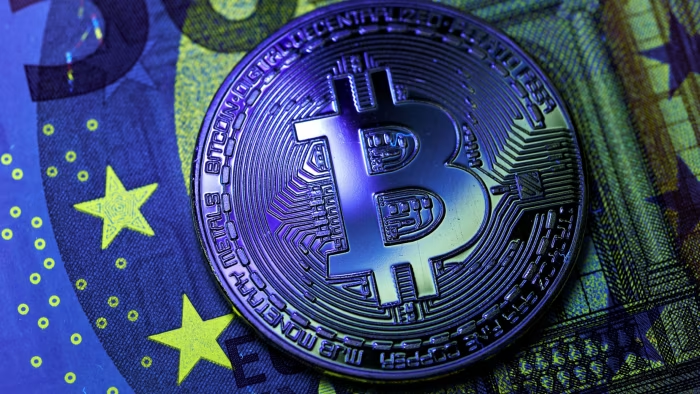
The cryptocurrency industry has always been known for its extreme ups and downs. From Bitcoin hitting record-breaking prices to sudden market crashes wiping billions overnight, the sector continues to attract both excitement and fear. Recently, many media headlines and analysts have begun asking the same question: Is crypto in trouble? And more importantly, what does the future of Bitcoin and digital currencies look like?
To understand where the crypto world is heading, we need to look at market trends, regulations, investor confidence, technological developments, and global adoption. In this article, we explore all these aspects and provide a clear picture of the future of Bitcoin and cryptocurrencies.
A quick look at the current situation
The volatility of the crypto market has made investors nervous. Major cryptocurrencies like Bitcoin, Ethereum, and Solana have experienced sharp price drops multiple times in recent years. Many reasons triggered these falls:
- Rising global inflation and interest rates
- Government restrictions and debates on crypto regulations
- Collapse of major crypto exchanges and platforms
- Security breaches and hacking incidents
- Fear-based selling and market panic
These events have created the impression that crypto is collapsing. But if we look deeper, the situation is far more complex.
Bitcoin: Still the king of crypto
Even after multiple market crashes and price fluctuations, Bitcoin continues to stand strong as the most dominant and trusted cryptocurrency in the world. What was once ignored by banks and governments is now gaining recognition from global financial institutions and major corporations.
Bitcoin’s leadership in the crypto industry is supported by several powerful factors:
Bitcoin has a fixed supply of 21 million coins, protecting it from inflation
Several global companies such as Tesla, MicroStrategy, and PayPal have invested in or supported Bitcoin
Many countries have legalized or regulated cryptocurrency trading
Bitcoin is the leading digital asset in long-term investment portfolios
Even during market downturns, long-term investors — often referred to as “HODLers” — continue to accumulate Bitcoin rather than sell it. This sustained confidence shows that Bitcoin is not just a trend, but a long-term digital asset with strong global support.
Why crypto is not going anywhere
Many critics claim crypto is a bubble. But digital currencies have already become deeply embedded in global finance and technology. Several powerful developments ensure crypto will remain relevant:
1. Blockchain technology
Cryptocurrencies are based on blockchain, which is being used in banking, insurance, supply chain, real estate, cyber-security, and more.
2.International payments
Crypto offers faster and cheaper international payments compared to traditional banking systems.
3. Web3 and Decentralized Finance (DeFi)
A new digital economy is forming through decentralized applications (DApps), crypto lending, staking, smart contracts, NFTs, and DAOs.
4. Increasing mainstream adoption
Millions of people use crypto trading apps and digital wallets for investing and day-to-day transactions.
So even though prices fluctuate, the industry infrastructure continues to grow.
Is the crypto market in trouble?
While recent downturns have raised concern among investors, the crypto market is not collapsing — it is evolving. What we are witnessing is a major transition phase in which weak projects are fading away and stronger, more reliable systems are taking shape. This shift is strengthening the long-term foundation of the entire digital currency ecosystem.
The industry today is shaped by both challenges and opportunities:
| Current Challenges | Emerging Opportunities |
|---|---|
| High price volatility | Wider global adoption and practical real-world applications |
| Uncertain and uneven regulations across countries | Introduction of clear legal frameworks that build trust |
| Security breaches and crypto scams | Better cybersecurity, auditing, and compliance standards |
| Market manipulation by bad actors | Transparent and accountable trading platforms |
| Collapse of fraudulent or poorly managed companies | Survival and growth of legitimate, well-regulated crypto organizations |
These setbacks are not signs of failure — they are signs of growth. The crypto world is moving from an experimental phase to a more stable, secure, and trustworthy financial ecosystem. As the industry matures, investors, businesses, and governments are gaining a clearer understanding of how digital currencies can benefit the global economy
The future of Bitcoin
Experts predict three big shifts in Bitcoin’s future:
1. Bitcoin as “Digital Gold”
Bitcoin is increasingly viewed as a store of value rather than just a payment method. Many wealth managers compare it to gold because of its scarcity and long-term investment potential.
2. Institutional involvement
Banks, investment funds, and corporations continue to adopt Bitcoin. Institutional adoption brings stability, liquidity, and trust.
3. The Bitcoin Halving effect
Every four years, Bitcoin mining rewards are reduced by half, which typically leads to major price growth due to reduced supply. The next halving is expected to push Bitcoin to new highs, according to analysts.
The Future of Other Cryptocurrencies
Bitcoin may be the most popular cryptocurrency, but there are thousands of other digital coins called altcoins. Their future will mainly depend on how useful they are in real life, how strong their technology is, and how many people and companies support them.
Some growing trends in altcoins include:
- Ethereum and smart contracts – helping developers build apps that run automatically without middlemen
- Layer-2 technologies – making crypto transactions faster and cheaper
- Decentralized Finance (DeFi) – offering banking-like services without banks
- Gaming and Metaverse coins – used in virtual games and digital worlds
- AI-based tokens – combining artificial intelligence with blockchain technology
However, not every coin will succeed. Many weak or scam projects may disappear over time. But the coins that solve real problems and provide real value are expected to grow and stay in the market for a long time.
Government Regulation — A turning point
Regulation is one of the biggest factors affecting the future of digital currencies. Governments across the world are working on laws that:
- Prevent money laundering and fraud
- Protect investors
- Support innovation
Countries like the USA, India, UAE, Japan, and Singapore are building frameworks to regulate crypto trading and taxation. Regulation will bring stability and increase investor confidence.
Are digital currencies the future of money?
Many financial experts believe that digital currencies — including cryptocurrencies and central bank digital currencies (CBDCs) — will become a major part of the world economy.
Some banks are already developing CBDCs, which will allow people to send and receive digital money without cash. This does not replace crypto, but rather makes digital finance more mainstream.
In the long term, the world may shift toward:
- Cashless global transactions
- Instant global payments
- Borderless digital financial systems
And cryptocurrencies will play an important role in this transformation.
Should you invest in Bitcoin and crypto?
Investing in crypto can be rewarding, but it also comes with high risk. Prices can rise quickly, but they can also fall suddenly. That’s why it is important to be careful and make smart decisions.
Before investing in Bitcoin or any other cryptocurrency:
- Learn about the project and understand how it works
- Look for long-term benefits, not quick profits
- Do not put all your money in one coin — spread your investment
- Invest only the amount you can afford to lose
- Stay calm — avoid emotional buying during a price rise or panic selling during a drop
Cryptocurrency is not a shortcut to becoming rich instantly. Successful investors are patient and focus on a long-term plan rather than short-term price changes.
Conclusion
So, is crypto in trouble? Not really. The market is facing challenges, but digital currencies are not disappearing. Instead, they are evolving, maturing, and integrating into the global financial system.
- Bitcoin remains the most trusted cryptocurrency
- Blockchain adoption continues to grow worldwide
- Regulation will bring long-term stability
- Digital currencies will play a major role in the future of money
The road ahead may be volatile, but the long-term future of Bitcoin and cryptocurrencies looks promising.