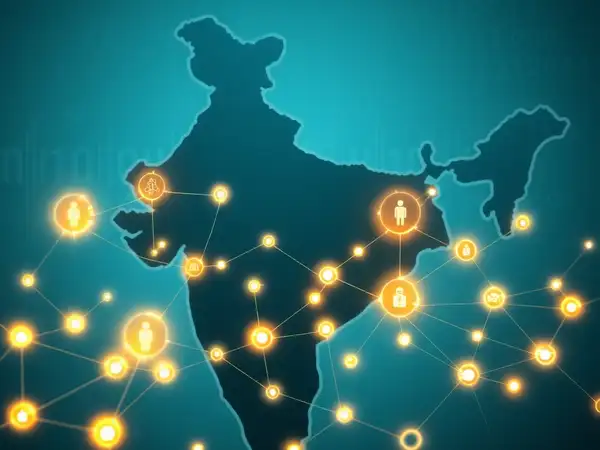
India is entering an exciting business revolution. Over the last decade, startups have changed how Indians work, live, travel, study, shop, invest and even receive healthcare. From fintech and e-commerce to edtech, space tech, AI and agritech — India is becoming a land of innovation and entrepreneurship.
By 2026, India is expected to become the Startup Capital of the World, thanks to its massive talent pool, strong digital economy, supportive government policies, global funding inflows and a culture that encourages risk-taking and innovation.
In this article, we explore why India is on track to lead the world in startups by 2026.
1. India Has One of the World’s Largest Young Talent Pools
India has the world’s largest youth population, with more than 65% of its citizens below the age of 35 — and this has become one of the biggest strengths fueling the country’s startup revolution. Today’s young generation is tech-savvy, creative, energetic and eager to embrace new ideas. They are not afraid to experiment and are highly motivated to find practical solutions to real-life challenges. Each year, millions of students graduate from engineering, management and technical fields, and instead of only searching for jobs, many now prefer to build something of their own. This major shift in attitude — from job seekers to job creators — is reshaping India’s economic landscape and accelerating the growth of the startup ecosystem.
2. Digital India Mission Has Transformed the Economy
The Digital India Mission has played a major role in transforming India’s economy by connecting millions of people to the digital world. With affordable smartphones, low-cost internet plans, and widespread access to online payment platforms like UPI, technology has become more accessible than ever. Digital learning, remote work, and e-governance platforms have further strengthened the country’s digital infrastructure.
Today, India has the highest digital payment adoption in the world and some of the most affordable data plans globally. This digital revolution has given a massive boost to the startup ecosystem. Entrepreneurs can now reach customers online, sell products globally, manage remote teams, and scale business operations quickly and efficiently. The strong digital backbone of India is one of the biggest reasons why global investors believe that the country is on track to become the world’s largest startup hub.
3. Government Policies Are Supporting Startups
The Indian government has launched several programs to encourage entrepreneurship, including:
| Startup Policy / Initiative | Benefits |
|---|---|
| Startup India | Tax benefits, funding support, easier compliance |
| Make in India | Boosts manufacturing and job creation |
| Atmanirbhar Bharat | Encourages innovation and self-reliance |
| Digital India | Expands internet access and digital services |
| Ease of Doing Business reforms | Fast business registration, online documentation |
There are now over 10,000+ government-recognized startup incubators and innovation hubs across India — from IIT campuses to rural villages.
This strong support system motivates budding entrepreneurs to build, test and scale their ideas.
4. Massive Funding Inflows and Growing Global Confidence
Venture capital and global investments in Indian startups have surged over the last few years. Investors from the US, Europe, Middle East and Asia are actively funding Indian innovations.
India now has:
- 100+ unicorns (startups valued above $1 billion)
- A rapidly growing list of soonicorns (soon-to-be unicorns)
- Global giants investing in India (Google, Amazon, Microsoft, Tesla, Meta)
Foreign investors see huge potential due to:
Large market size
High consumer spending growth
Strong digital infrastructure
Skilled workforce
Affordable business operations
With this confidence and funding flow, India is set to become the world’s top startup destination by 2026.
5. Startups Are Solving Real-World Problems
Unlike many countries where startups focus on luxury or entertainment services, Indian startups are solving real day-to-day problems, such as:
| Problem | Startup Solution |
|---|---|
| Expensive finance services | Fintech apps & digital banks |
| Lack of quality education | Online learning platforms |
| Unemployment | Gig economy & freelancing platforms |
| Farming challenges | Agritech & drone farming |
| Healthcare access | Telemedicine & health tech |
| Transportation issues | Electric vehicles & mobility apps |
These innovations are not only transforming India — they are being adopted globally. Affordable solutions created in India are becoming popular in Asia, Africa, Europe and Latin America.
6. Boom in Tier-2 and Tier-3 City Startups
For a long time, most Indian startups were concentrated in major metro cities like Bengaluru, Delhi, and Mumbai. However, the startup wave is now rapidly spreading to Tier-2 and Tier-3 cities across the country. Places such as Jaipur, Indore, Patna, Bhubaneswar, Lucknow, Surat and Coimbatore are emerging as exciting new startup hubs.
These cities provide several strong advantages for entrepreneurs. They offer much lower operational costs, making it easier to set up and run businesses. They also have a large pool of skilled talent, including young graduates eager to explore new opportunities. With growing internet connectivity and digital adoption, businesses can reach customers online without needing to be in a metro city. Moreover, these cities have a strong and fast-growing consumer base that is ready to try new products and services.
This shift shows that India’s startup ecosystem is becoming more inclusive and widespread. Innovation is no longer limited to big cities — it is happening everywhere, and smaller cities are now playing a crucial role in shaping the future of India’s entrepreneurship landscape.
7. Entrepreneurship Is Becoming a Culture
A major reason for India’s rapid startup growth is changing mindset.
Earlier:
People preferred secure government or corporate jobs.
Now:
Students want to build something of their own. Parents are also supporting these dreams. Schools and colleges are introducing entrepreneurship labs, startup clubs and innovation competitions.
Success stories like Ola, Paytm, Zomato, Flipkart, Zerodha, BYJU’S, PhonePe, Zepto and Nykaa inspire more young minds to take risks and think big.
8. India Has a Huge Domestic Market
With 1.4+ billion people, India has one of the largest consumer markets in the world. Startups have huge opportunities in almost every sector:
- Shopping
- Finance
- Gaming
- Travel
- Beauty
- Food delivery
- Education
- Real estate
- Electric vehicles
If a startup succeeds in India, it can succeed anywhere.
9. AI and Deep-Tech Innovation Will Lead the Future
India is not only building apps — it is building the future.
Startups in AI, robotics, cybersecurity, biotech, Web3, semiconductors, green energy and space tech are rising rapidly. ISRO has paved the foundation for private space companies. AI innovation is accelerating due to the rising number of:
- Data scientists
- Software engineers
- Machine learning researchers
- AI startups and research labs
By 2026, India will be a leader not only in software development, but also in deep-technology startups.
10. Job Creation and Economic Growth
Startups are creating millions of direct and indirect jobs in India. As the startup ecosystem expands, the country benefits through:
- Higher employment
- Skill development
- Economic growth
- Global partnerships
- Export of products and services
A strong startup economy means more opportunities for students, professionals, and investors.
Conclusion
India is standing at the edge of a historic transformation. With its young population, strong digital infrastructure, huge domestic market, government support and global investor interest, India is ready to become the Startup Capital of the World by 2026.
The world is watching India — not just as a market, but as a powerhouse of innovation.
The rise of Indian startups is not only changing business — it is shaping the future of technology, jobs and the global economy. And the next two years will mark a defining chapter in India’s growth story.